
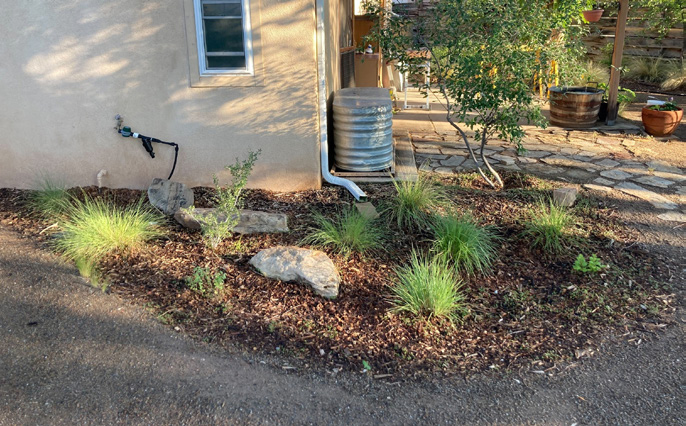
In an average year, most Albuquerque roofs shed over 10,000 gallons of rainwater! This simple rain garden captures and infiltrates some of that water using a mulched basin. Photo by Megan Marsee from Bernalillo County, thanks to Arid LID Coalition.
Plant the Rain
-
Water scarcity is the biggest challenge for trees in our climate. Unfortunately, our urban landscape is designed to shed water as quickly as possible.
-
By reshaping your landscape to collect and absorb rainwater, you can boost your trees' health and growth rate with less irrigation.
-
Albuquerque Water Authority offers rebates to homes that practice rainwater harvesting.
-
Bernalillo County provides a series of guides to get you started.
Collect Street Runoff
- Have you noticed how much water flows down your road after a rain? Wish that water could support trees instead? With eddy basins, it can! Also called GSI basins, these are a form of Green Stormwater Infrastructure.
- If you're already capturing the rainfall in your home and yard, an eddy basin transforms your street into further catchment surface. A basin can turn a drizzle into a deep soaking, multiplying your effective annual rainfall.
- Just as desert rivers and streams create bosque forests, a basin can provide sufficient water for a drought-tolerant tree.
- Native trees that grow in arroyos—dry desert streambeds—often thrive in the urban equivalent. These trees have deep roots that are well-behaved near pavement and can access water months after a rain. See example species below.
- Albuquerque now offers permits to cut or drill through a curb to bring water to a basin.
- Las Cruces and Santa Fe offer similar permits.
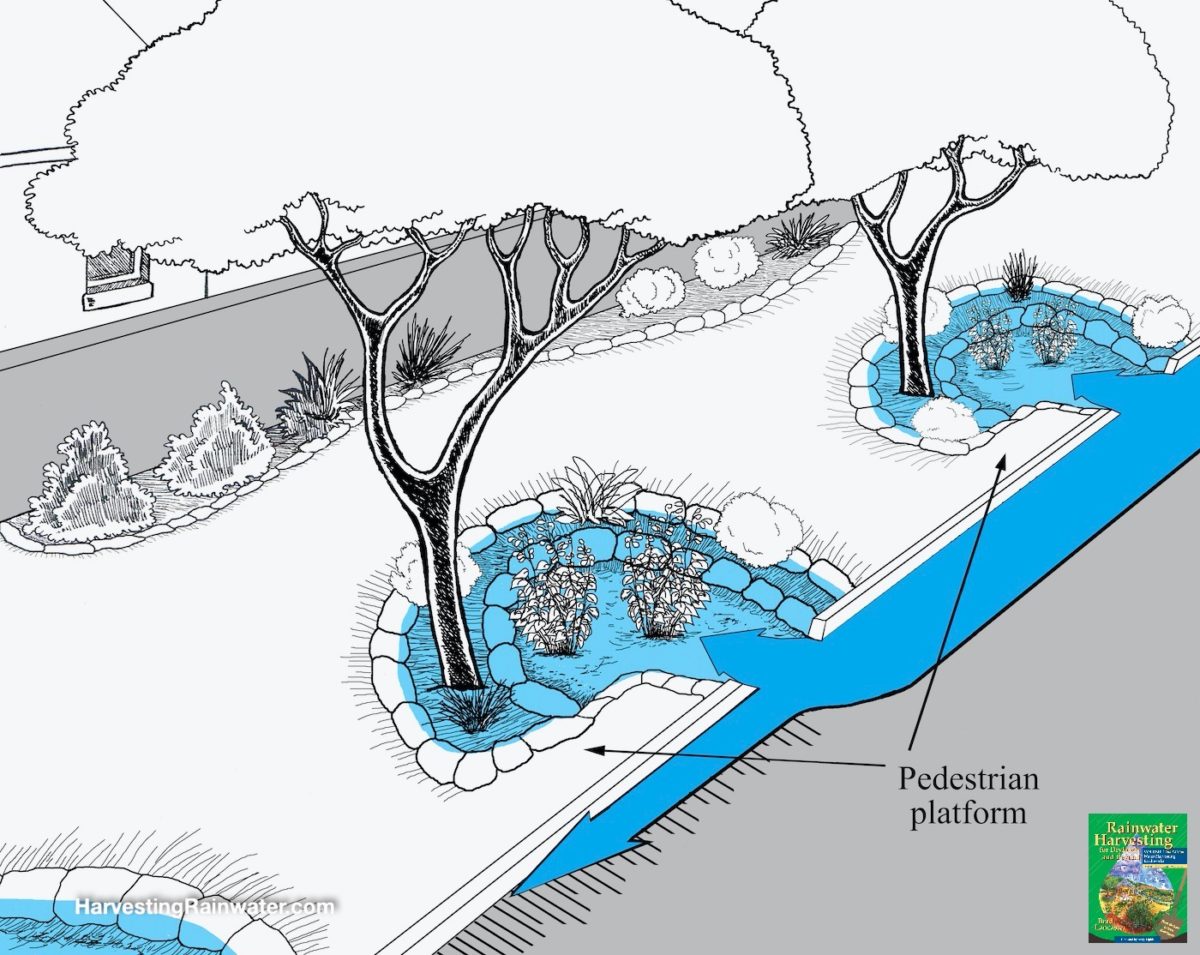
These eddy basins collect water from the street to irrigate native trees and other plants. Credit with: Reproduced with permission from Rainwater Harvesting for Drylands and Beyond, by Brad Lancaster, www.HarvestingRainwater.com.”
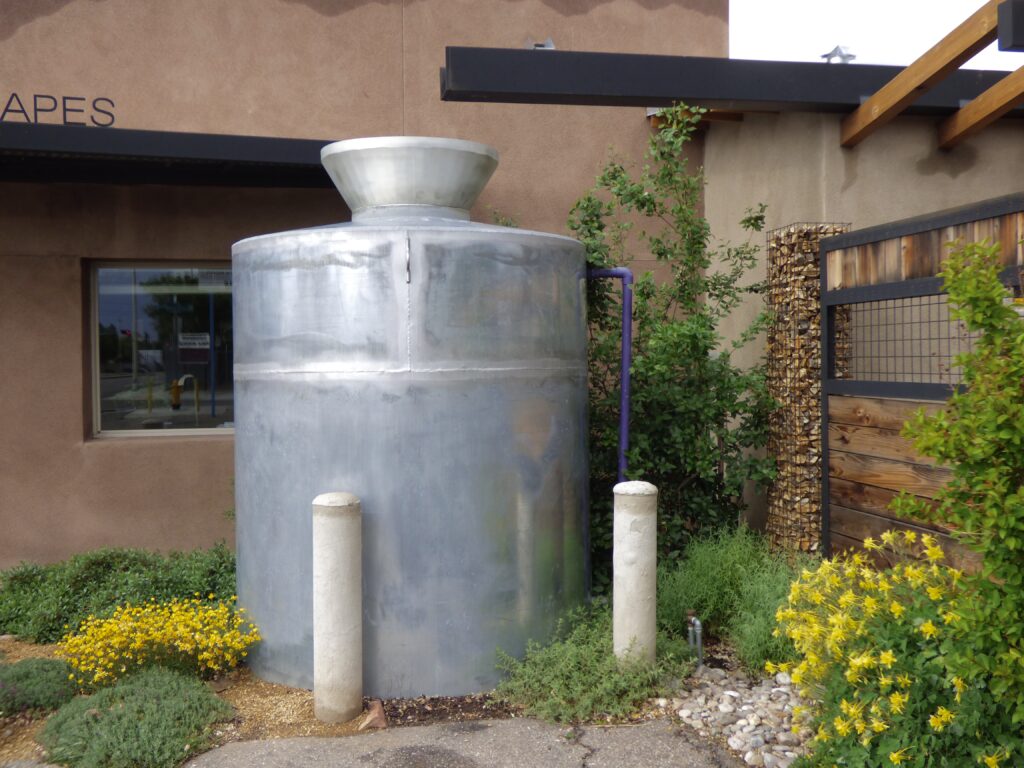
A cistern collecting roof runoff. Photo by Hunter Ten Broeck of WaterWise Landscapes, thanks to Arid LID Coalition.
Rain Barrels
- Rain barrels or cisterns are a way to cover the gaps between rains while reducing your municipal water use.
- Plants grow best on rainwater! It's free of salt and alkaline minerals, and it contains nitrogen fixed by lighting storms.
- They're especially helpful for growing vegetables and fruit trees that require regular irrigation is for a high yield.
- A heavy monsoon rain will fill a barrel. Direct the overflow to a vegetated basin in your landscape to store water in your barrel, soil and plants.
- Most Albuquerque area residents can get rebates on rain barrels through the Water Authority. Ineligible Bernalillo County residents can get a free or discounted barrel through Bern Co's water conservation incentives.
Grow a Rain Garden
-
Where there's water, there will be life! Get ahead of unwanted plants ("weeds") by planting your basin with native shrubs, grasses and wildflowers.
-
Understory plants reduce erosion, improve infiltration, build soil and capture and break down toxins. Choose native plants to support pollinators and other wildlife and build a resilient and vibrant ecosystem in your neighborhood.
- A thick layer of organic mulch improves infiltration and builds soil, supporting existing plants while reducing weed germination.
-
Buy seeds from a local nursery or collect them from native plants growing in your neighborhood. Check out the South Broadway Seed Library for free vegetable and wildflower seeds.
-
If you're in Albuquerque, consider certifying your rain garden as an ABQ Backyard Refuge!
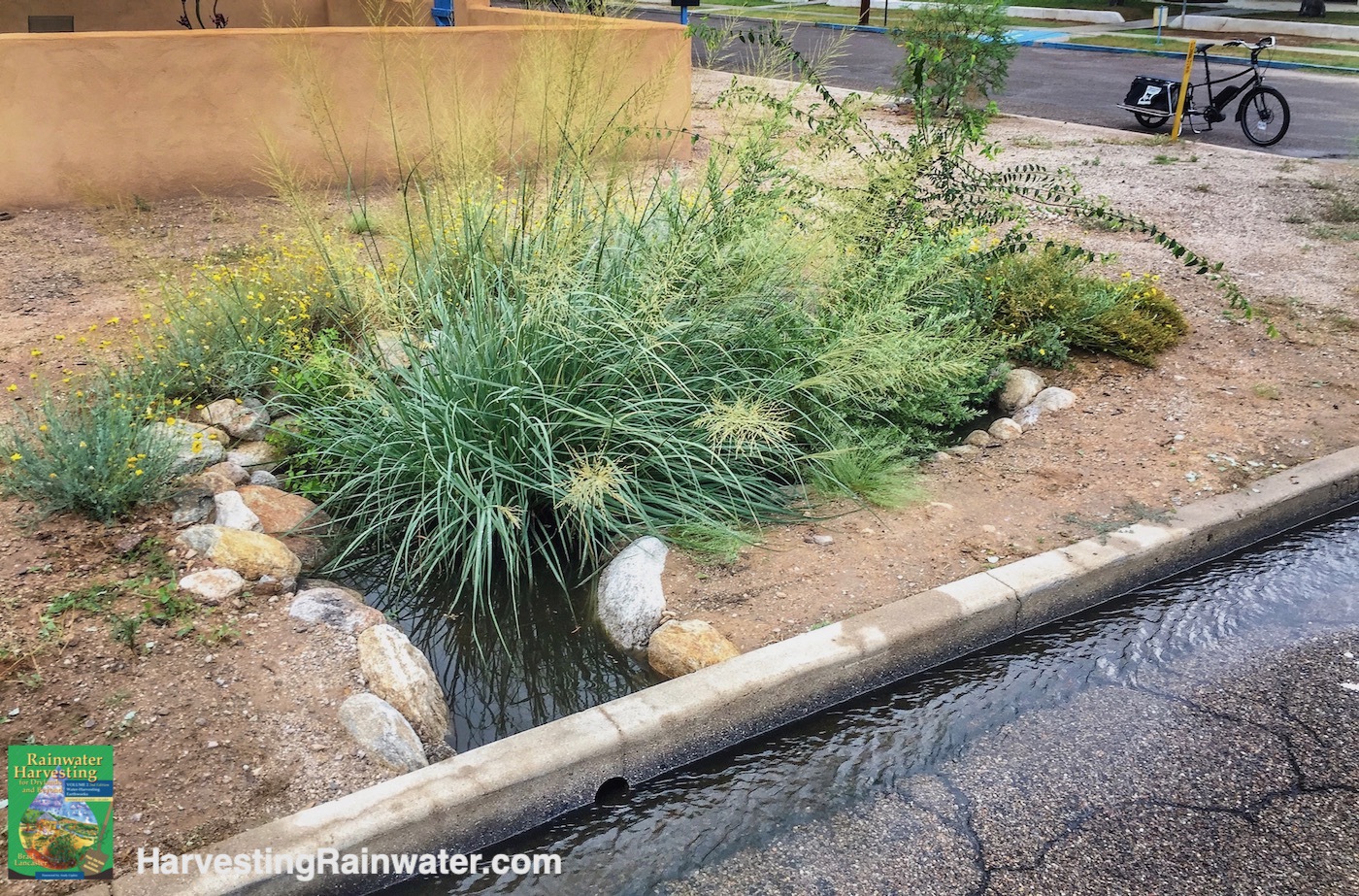
A curb core funneling street runoff to a basin planted with a netleaf hackberry tree, big sacaton grass and other native plants. Reproduced with permission from Rainwater Harvesting for Drylands and Beyond, by Brad Lancaster, www.HarvestingRainwater.com.
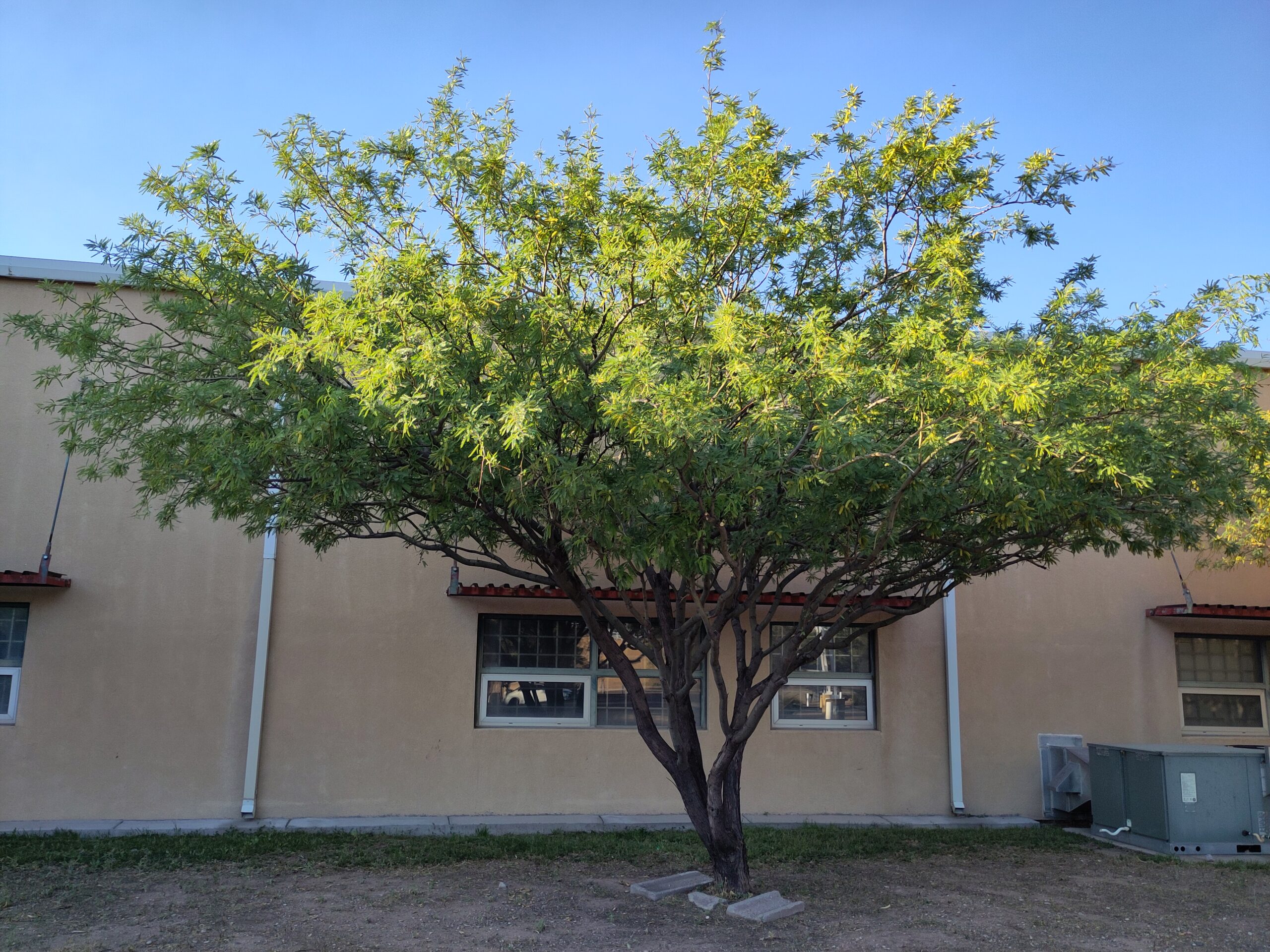
A velvet mesquite. Gutters support this tree with roof runoff, but infiltration could be improved with mulched basins. Photo from Cool it Burque, www.coolitburque.org
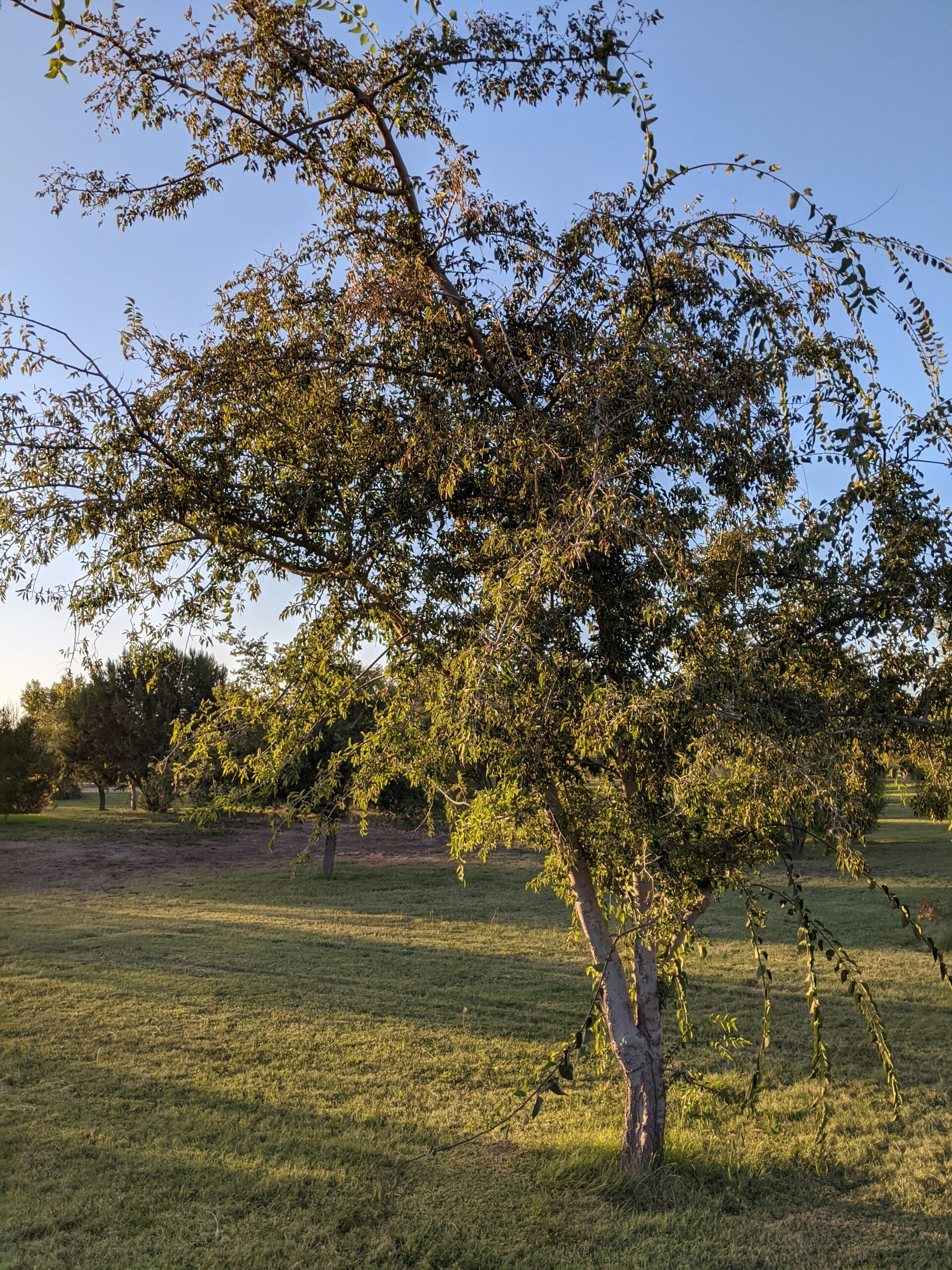
A young netleaf hackberry. Photo from Cool it Burque, www.coolitburque.org
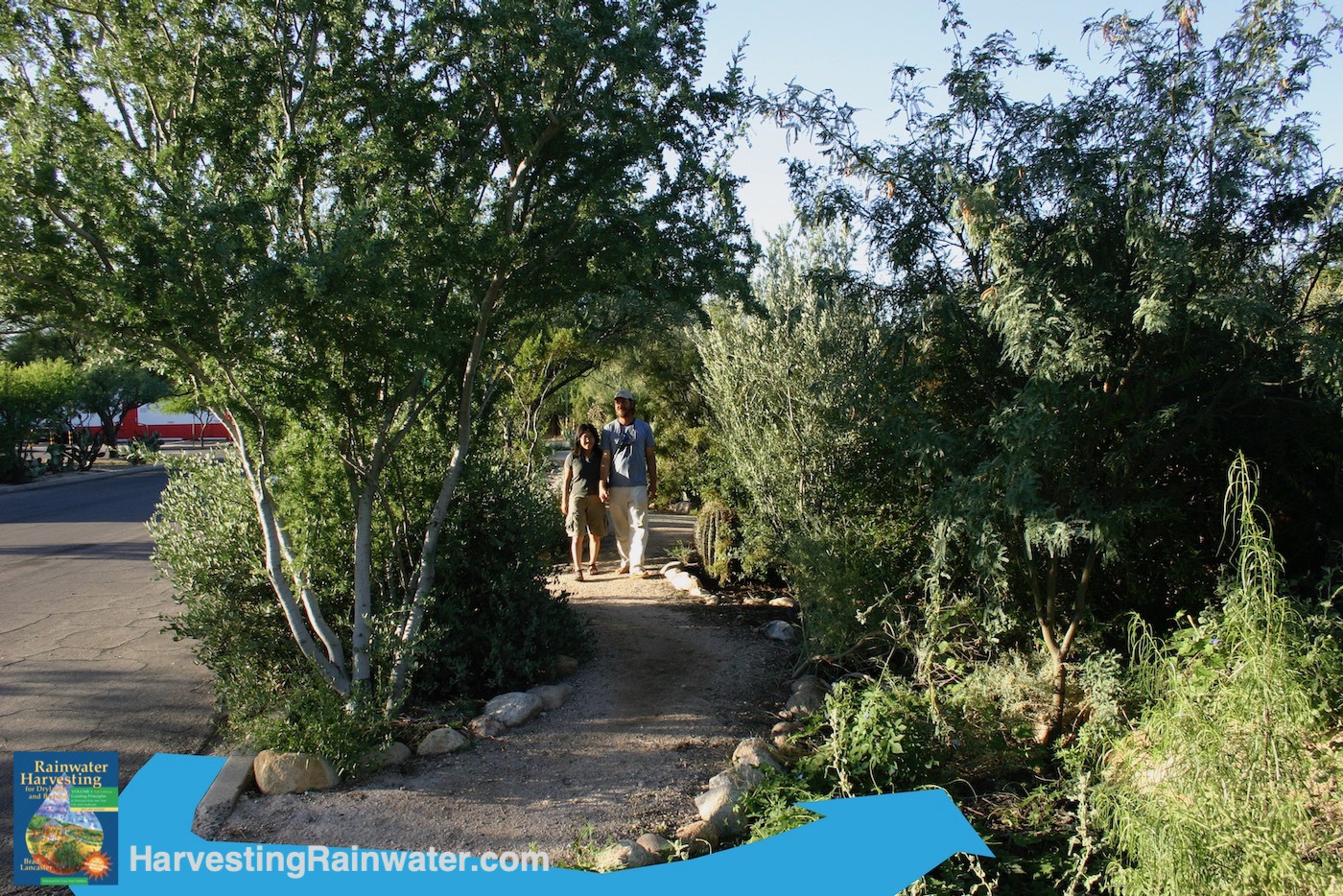
This forest in Tuscon is watered entirely with rainwater. Reproduced with permission from Rainwater Harvesting for Drylands and Beyond, by Brad Lancaster, www.HarvestingRainwater.com.”
Trees for Rain Gardens
Medium to large (20'-50'):
- Desert Willow 🌶️ (Chilopsis linearis)
- Velvet Mesquite 🌶️🏜️ (Neltuma velutina)
- Texas (Eastern) Honey Mesquite 🌶️✂️ (Neltuma glandulosa)
- Screwbean Mesquite/Tornillo 🌶️ (Strombocarpa pubescens)
- Netleaf Hackberry 🌶️ (Celtis reticulata)
- Emory Oak 🌶️⛰️ (Quercus emoryi)
- Gray Oak 🌶️⛰️ (Quercus grisea)
- Jujube (Ziziphus jujuba)
- Osage Orange (Maclura pomifera)
- Afghan Pine (Pinus brutia)
- Italian Stone Pine (Pinus pinea)
- Arizona White Oak 🌶️⛰️❓ (Quercus arizonica)
- Canyon Live Oak 🌶️⛰️❓ (Quercus chrysolepis)
- Soapberry 🌶️❓ (Sapindus drummondii)
- Aleppo Pine 🏜️❓ (Pinus halepensis)
Small (10'-20'):
- Desert Broom 🌶️🏜️✂️ (Baccharis sarothroides)
- New Mexico (Western) Honey Mesquite 🌶️✂️ (Neltuma odorata)
- Catclaw Acacia 🌶️🏜️✂️ (Senegalia greggii)
- Frijolito/Mescalbean/Mountain Laurel 🌶️🏜️ (Dermatophyllum secundiflorum)
- New Mexico Olive 🌶️✂️ (Forestiera neomexicana)
- Arizona Rosewood 🌶️ (Vauquelinia californica)
- Soaptree Yucca 🌶️ (Yucca elata)
- Joshua Tree (Yucca brevifolia)
- Desert Scrub Oak 🌶️⛰️ (Quercus turbinella)
- Western Chokecherry 🌶️⛰️ (Prunus virginiana var. melanocarpa)
- New Mexico Locust 🌶️⛰️ (Robinia neomexicana)
- One-seed Juniper 🌶️ (Juniperus monosperma)
- Piñon 🌶️⛰️ (Pinus edulis)
- Fragrant Ash 🌶️⛰️❓ (Fraxinus cuspidata)
Very small (8'-15'):
- Desert Sumac 🌶️✂️ (Rhus microphylla)
- Cliffrose 🌶️ (Purshia stansburyana)
- Red Agarita 🌶️✂️ (Berberis haematocarpa)
- Texas Agarita 🌶️✂️ (Berberis trifoliata)
- Creosote 🌶️🏜️ (Larrea tridentata)
- Big Saltbush / Quailbush 🌶️🏜️✂️ (Atriplex lentiformis)
- Ocotillo 🌶️🏜️ (Fouquieria splendens)
- Mountain Mahogany 🌶️⛰️ (Cercocarpus breviflorus)
Specific needs:
- ❓ = Rarely planted, needs more study
- 🌶️ = New Mexico Native
- 🏜️ = Best below 6000'
- ⛰️ = Best above 6000' or with summer irrigation.
- ✂️ = Naturally shrubby. Lower limbs can be removed to form a tree
Sourced from plant lists by ABQ Water Utility Authority and Bernalillo County
Trees adapt their size to available water. Without irrigation or a reliable GSI basin, they will grow more slowly and will not reach their maximum size.
Resources
- Residential Rainwater Harvesting guides by Bernalillo County
- Irrigation Guide by the ABQ BernCo Water Utility Authority
- Introduction to GSI by Arid LID Coalition
- GSI Maintenance Video Series by Arid LID Coalition
- Office of the State Engineer - Water Conservation Program
- Books on rainwater harvesting at the ABQ Library
- Backyard Refuge Program
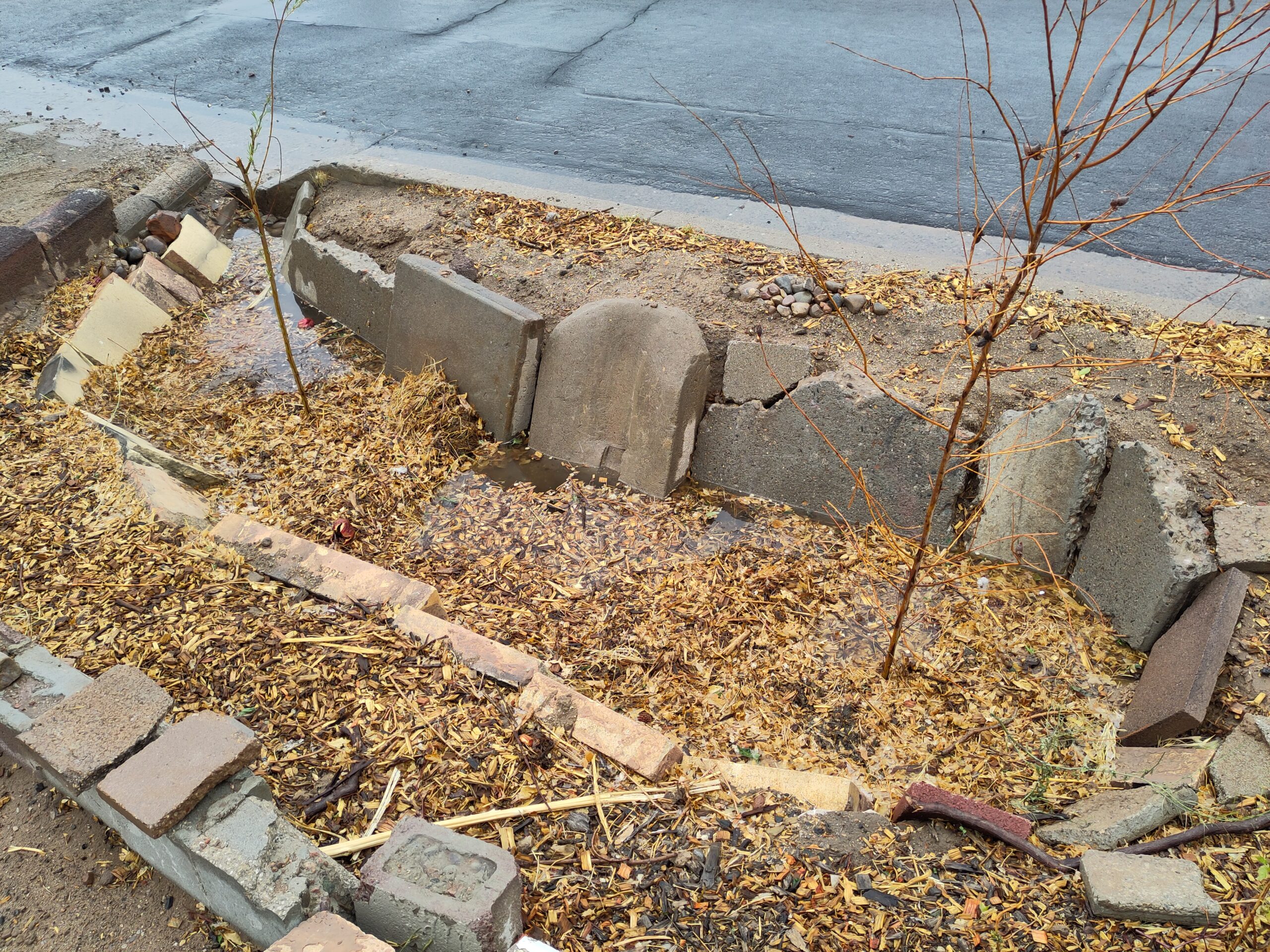
A basin stabilized with salvaged concrete "urbanite." The trees planted are experimental coyote willows, which may not survive drought. Photo from Cool it Burque, www.coolitburque.org