🌳 Upcoming Opportunities with TNM Education 🌳
April 1, 2026
Right Tree, Right Place: A New Mexico Perspective
April 6, 2026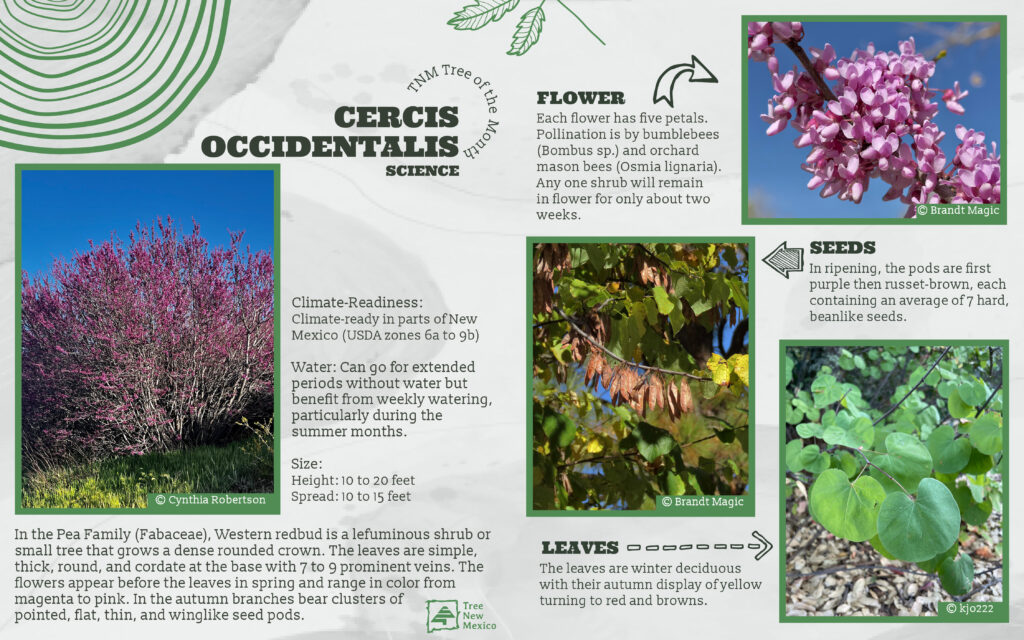
© Brandt Magic, iNaturalist
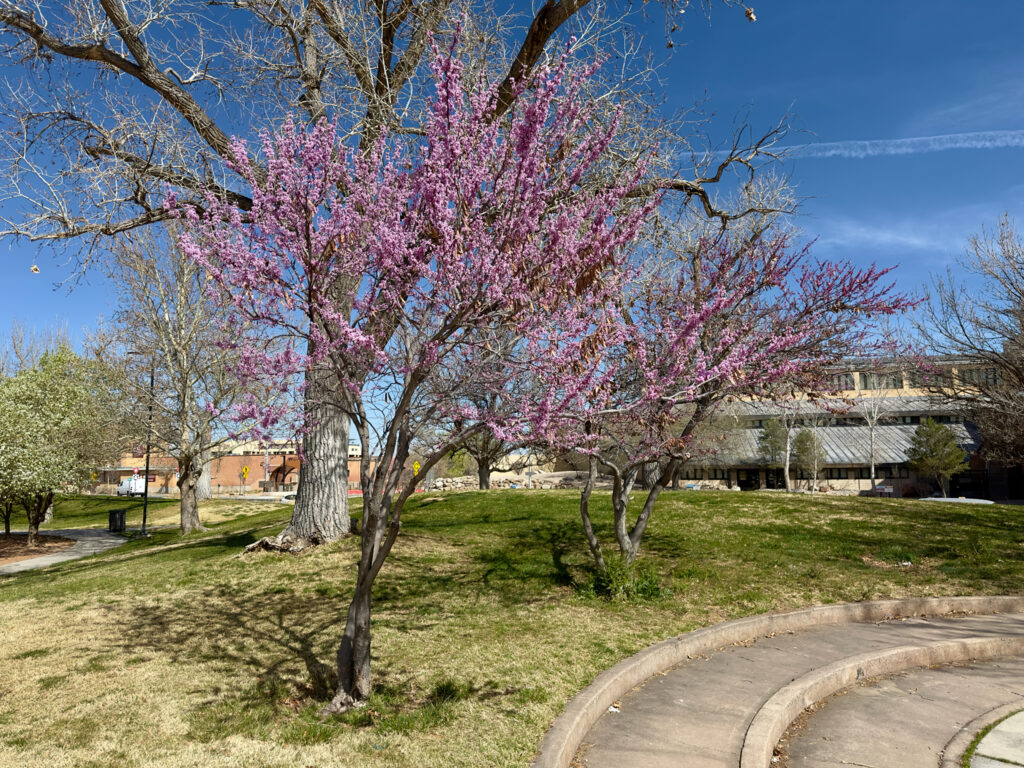
Scientific name: Cercis occidentalis
Description: Cercis occidentalis, Western redbud, is a small tree or shrub in the legume family, Fabaceae. It grows at elevations of 4,000 ft. or less in canyons and other steep slopes with rocky soil along streams. This is a drought-tolerant, sun-loving tree, growing mostly as a single tree but sometimes in shrubby clumps. It is native to California, Arizona, Nevada, and southern Utah, with small populations in northern Mexico. It thrives in the diverse habitats of New Mexico.
Size: Western redbud can grow up to 10-20 feet tall and 10-20 feet wide.
Caution: Prune the tree in the fall, winter, or early spring after it reaches a minimum age of 5 years to remove dead or dying branches that might harbor diseases or insects.
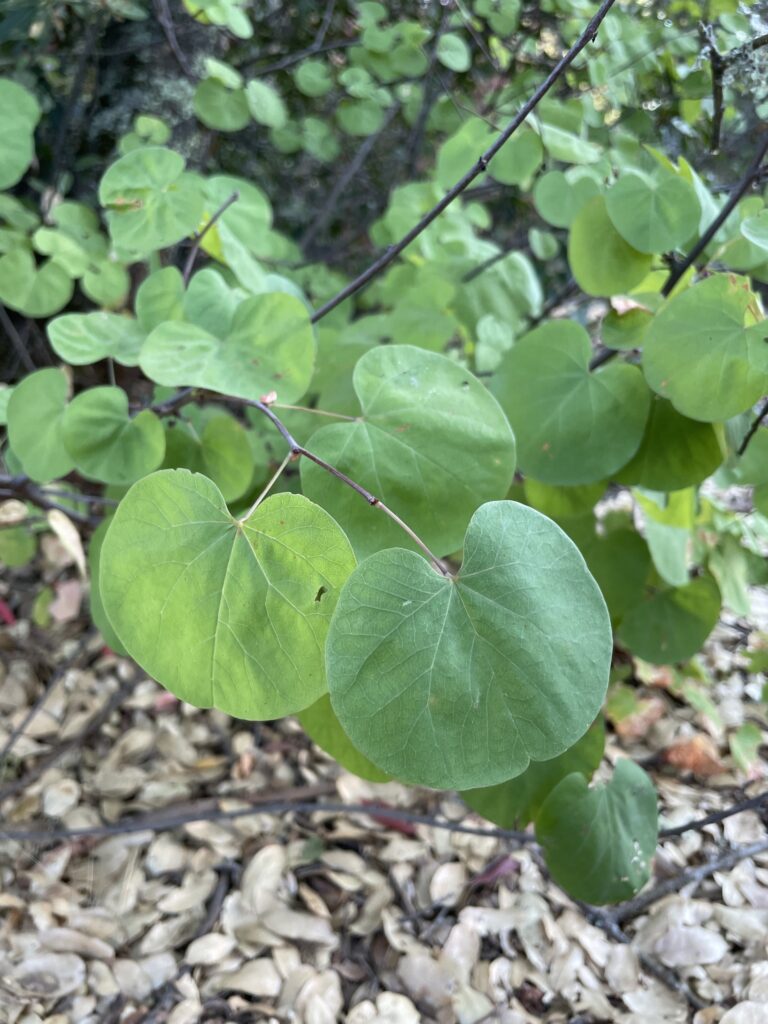
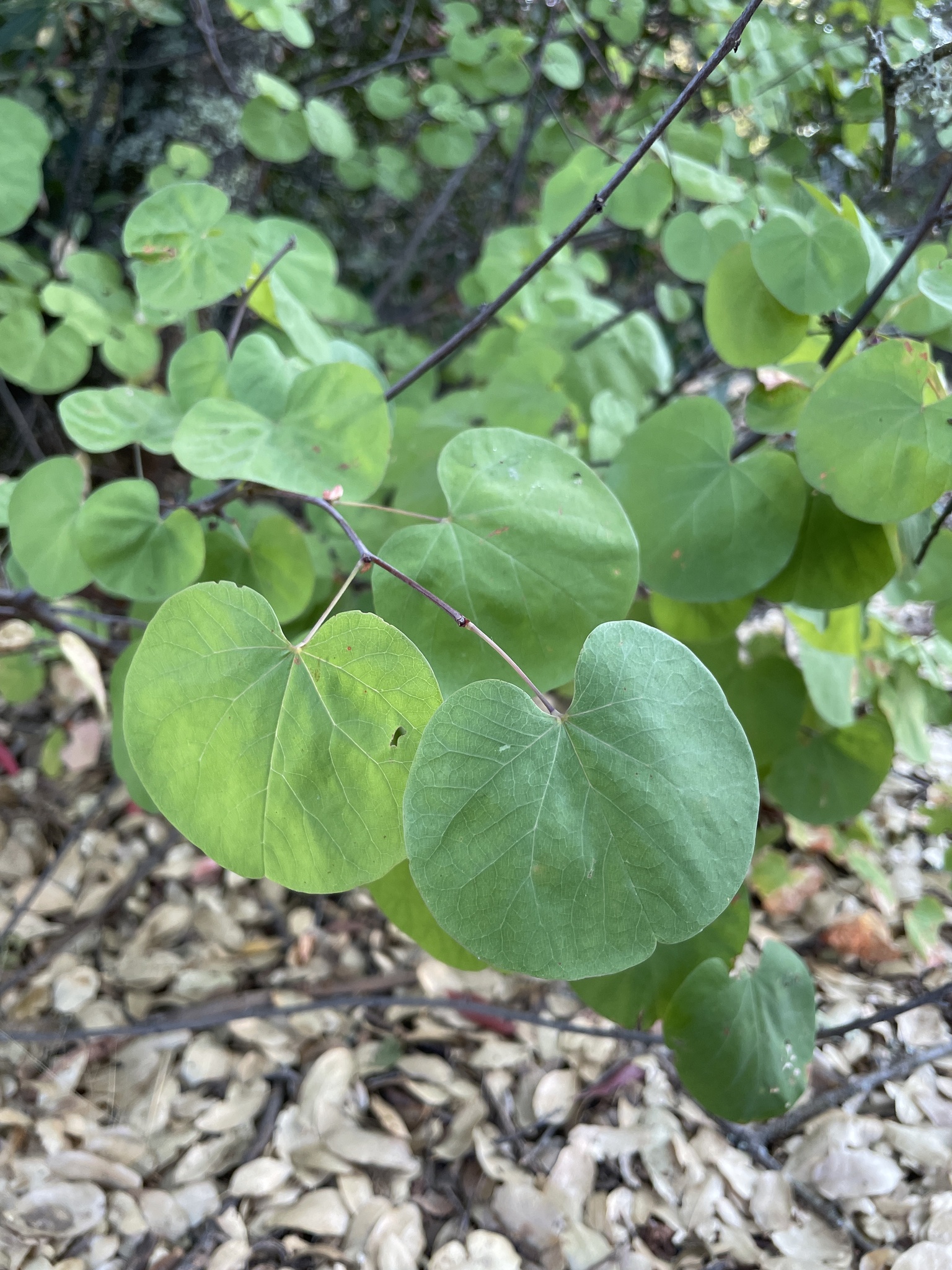
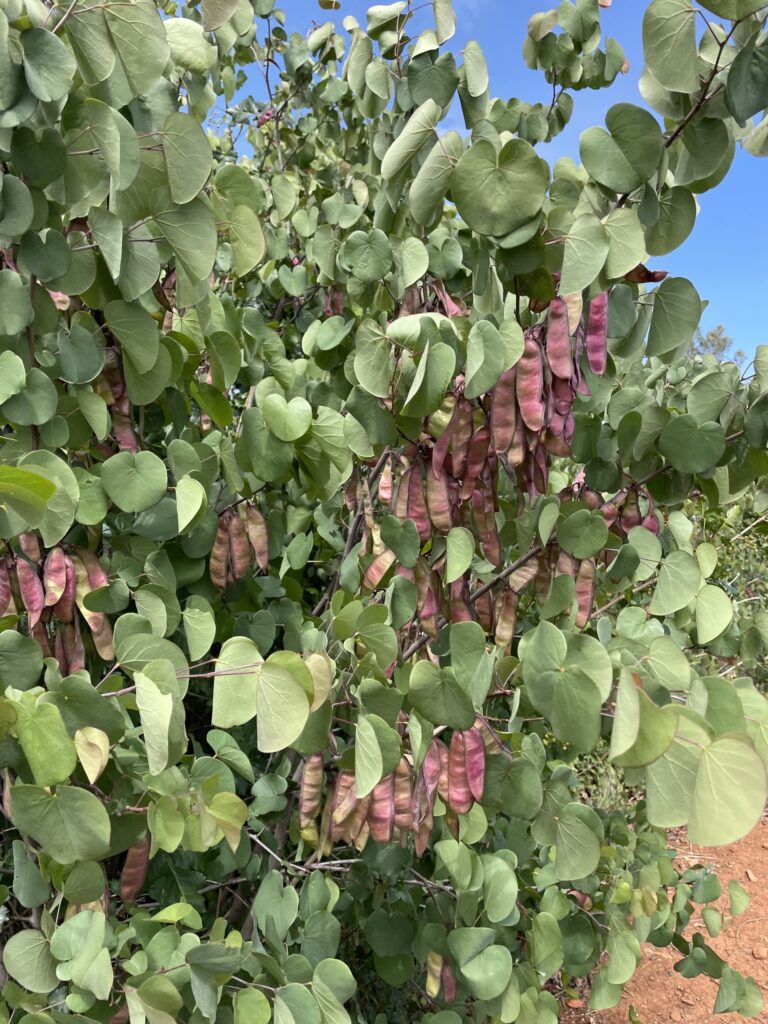
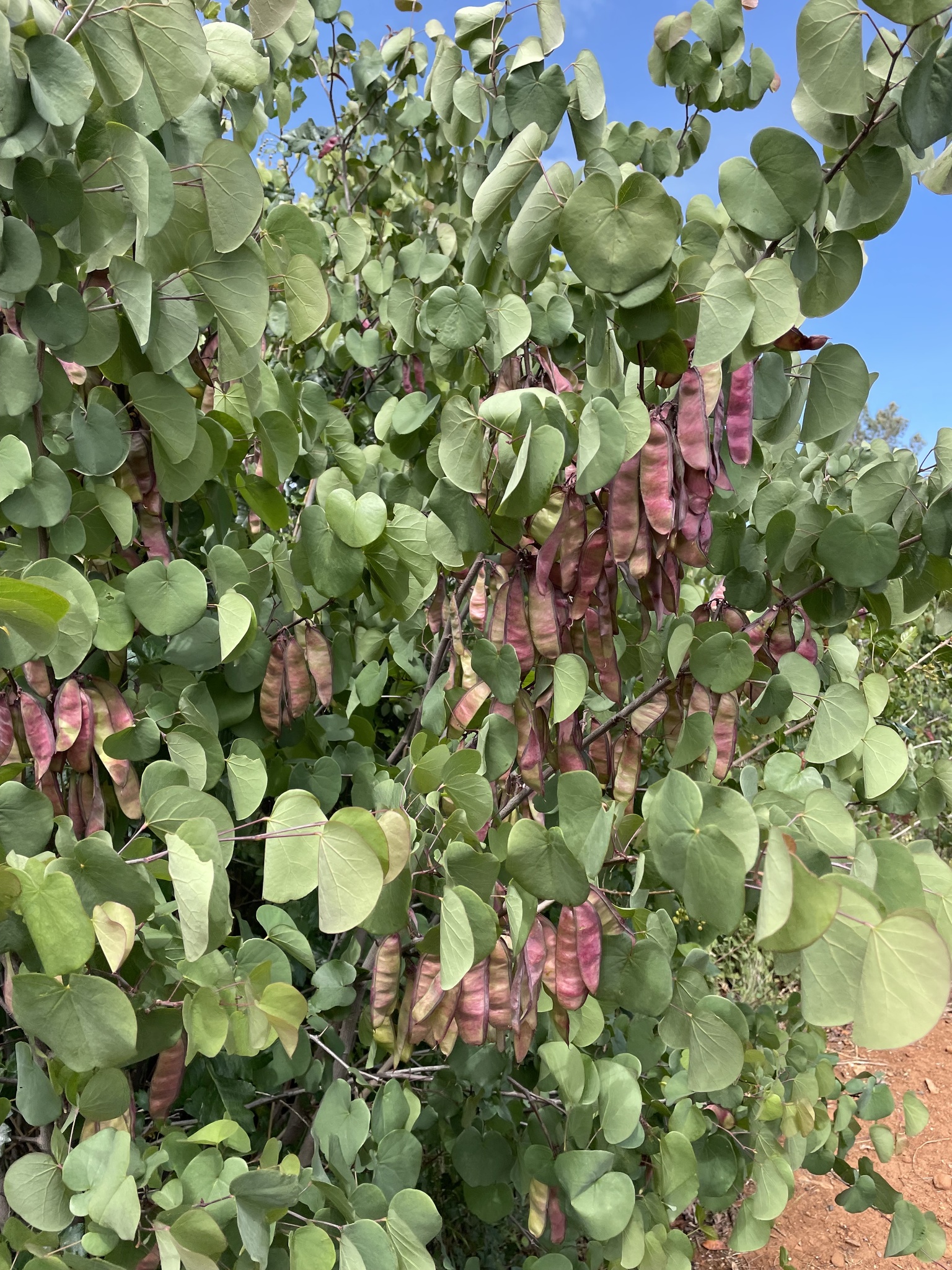
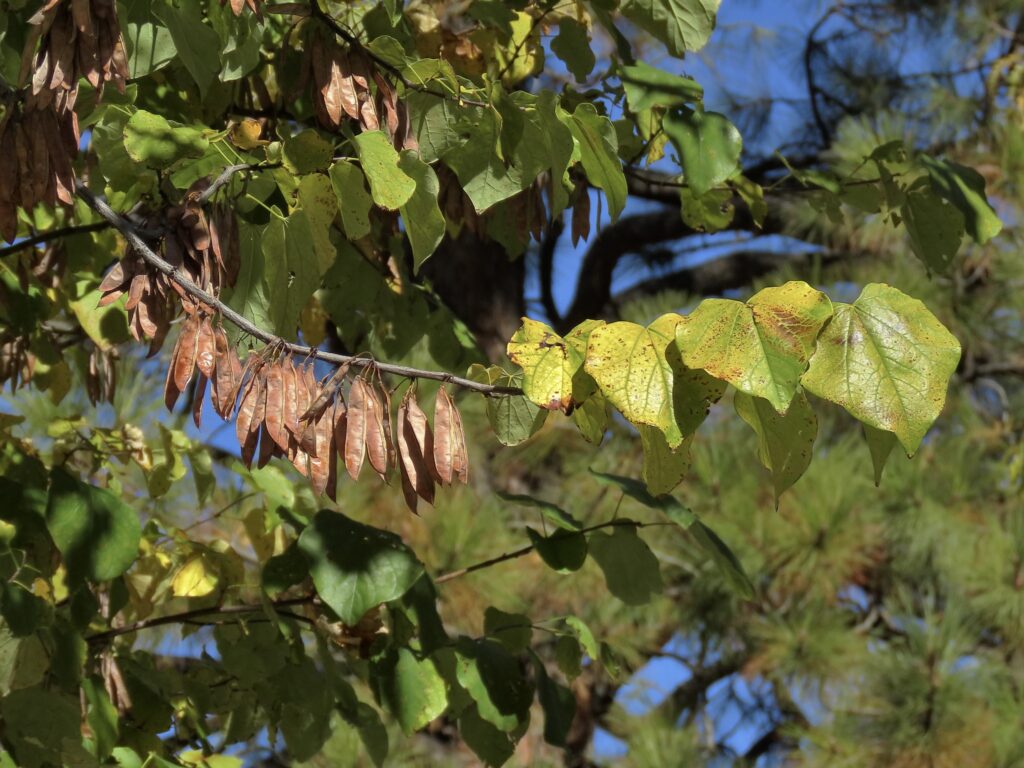
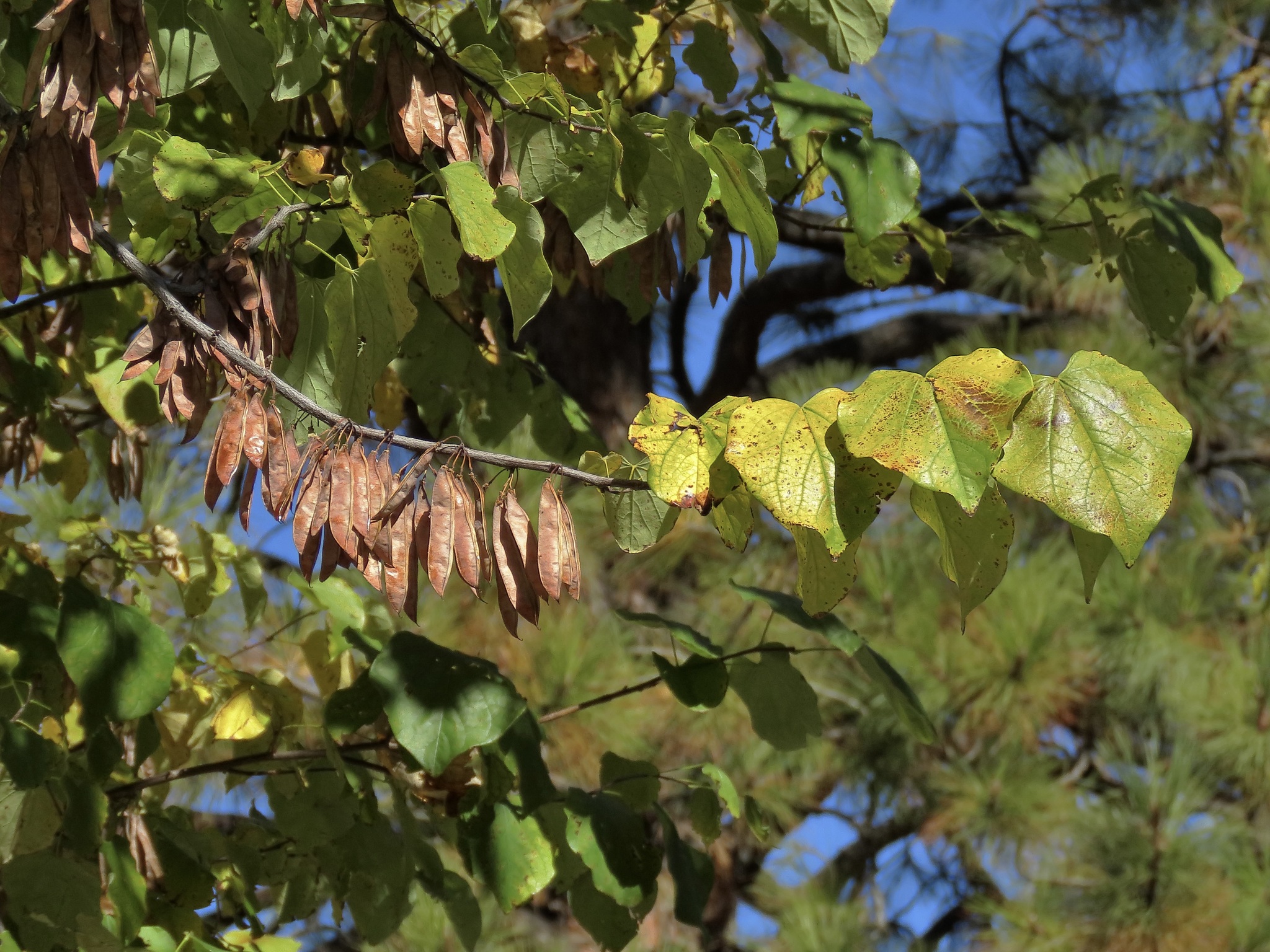
Leaf: The leaves are simple, thick, round or reniform, and cordate (heart-shaped) at the base. They form seven to nine prominent veins. Foliage is blue-green, turning light yellow or red in the fall, and winter deciduous.
Seeds: Western redbud can be propagated by seed. If possible, collect seeds from local sources to help maintain the species’ genetic diversity. Germination requires special pretreatment due to the tough seed coat. One method is to place the seeds in a container, pour boiling water over them, and let them soak overnight. After soaking, the seeds can be covered with peat moss and refrigerated for two months, or planted immediately. Sow the seeds in a well-drained soil mix and place them in a warm, sunny location.
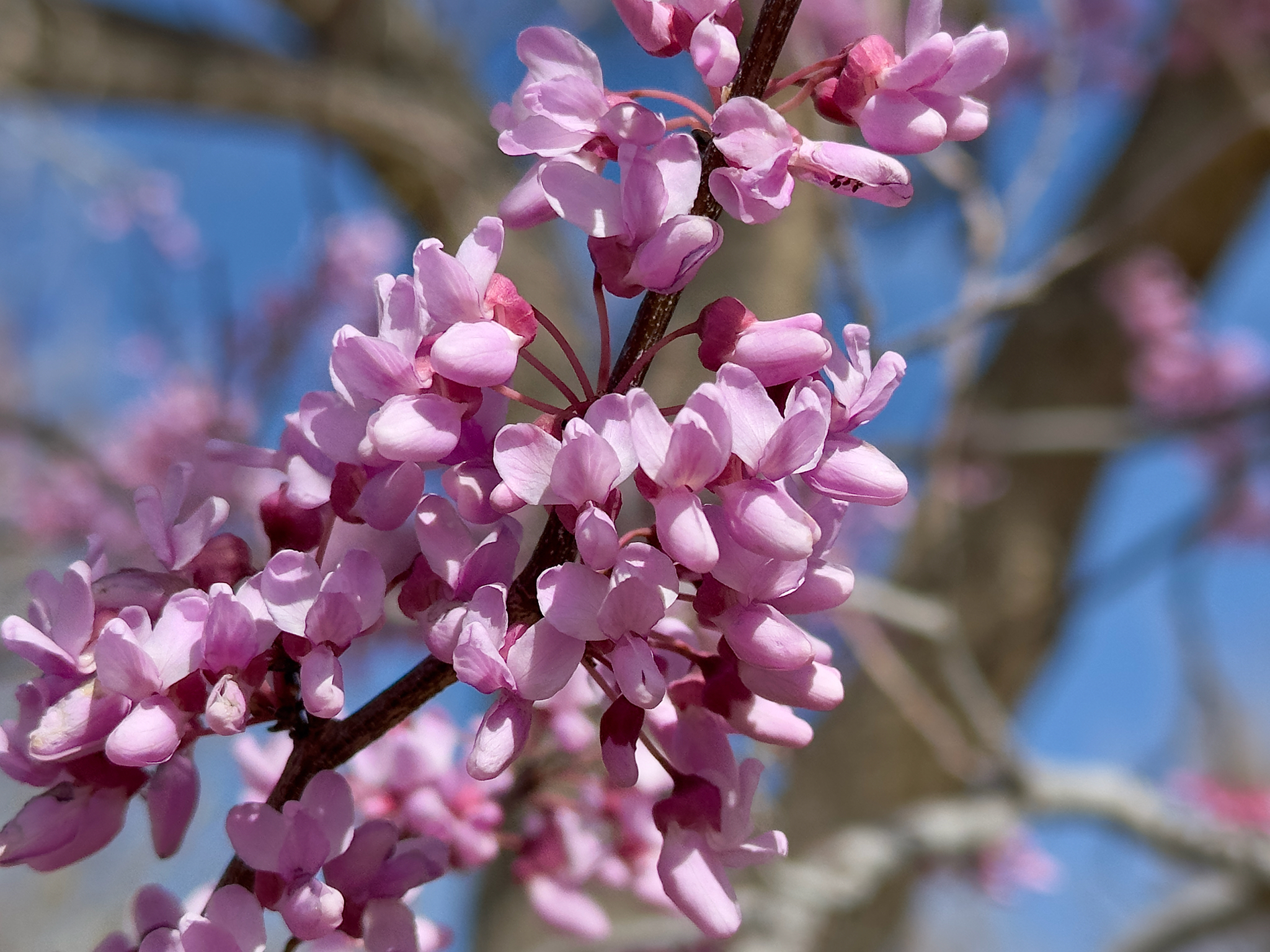
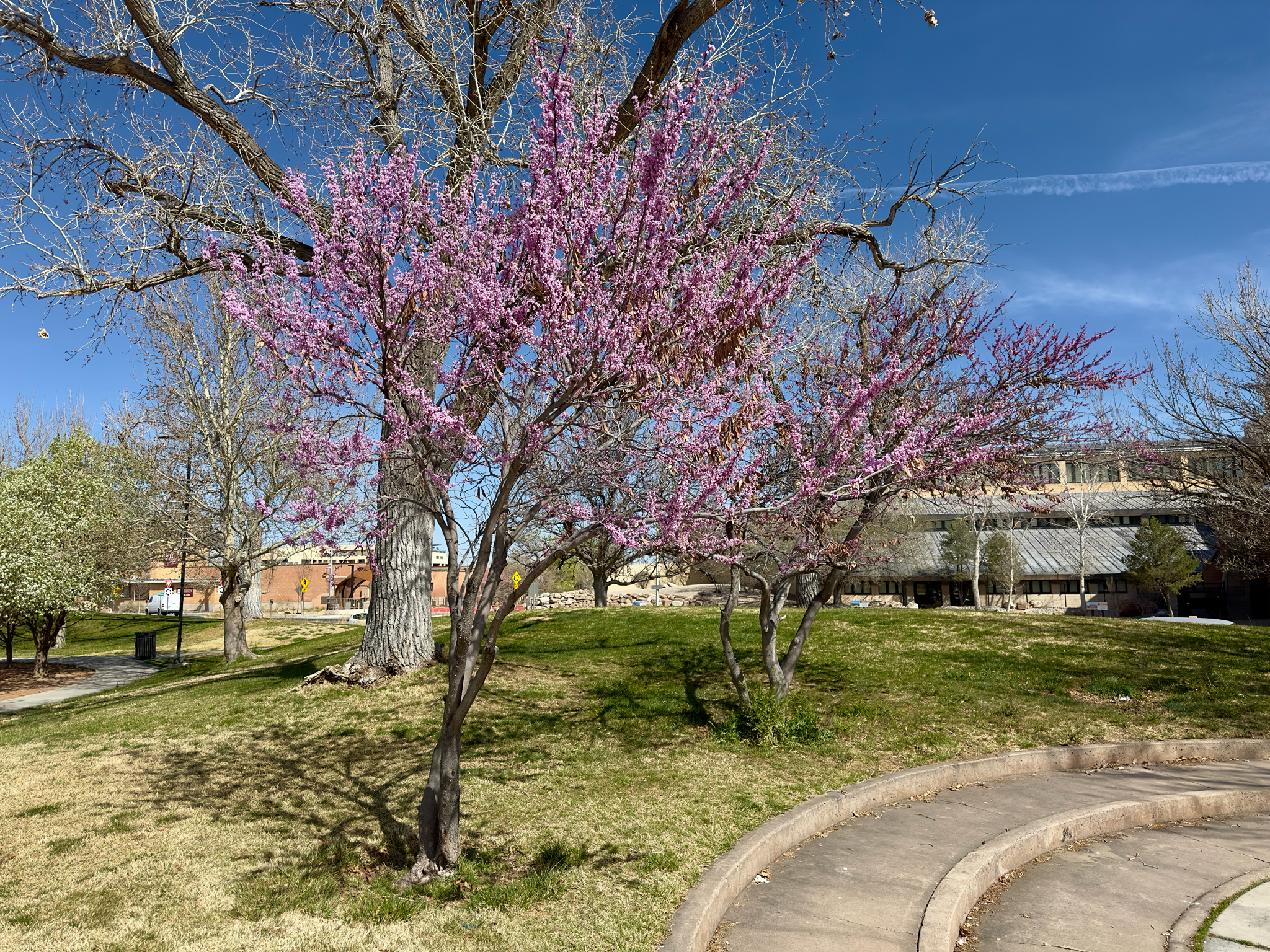
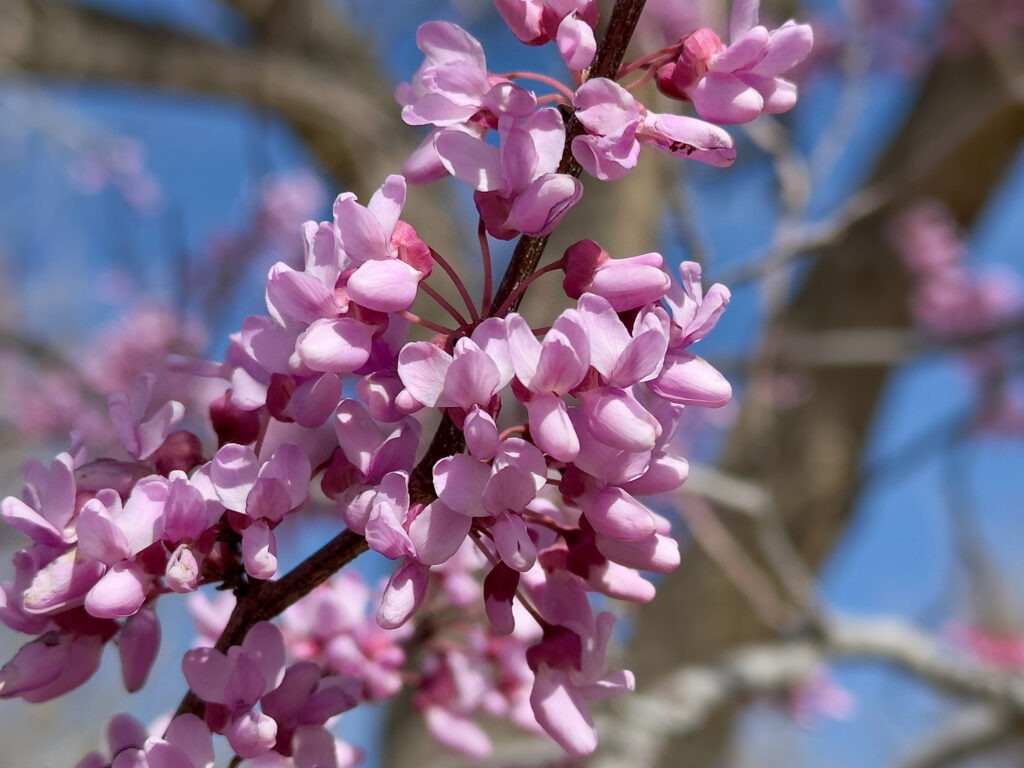
Flowers: The striking flowers appear before the leaves in small fascicles along the branches and last only about two weeks, between February and April. Pollination is by bumblebees and orchard mason bees. ‘Alba’ is white flowering.
Bark: The bark is a key feature that differentiates the Western redbud from other redbuds. It has a smooth texture and brown color, making it a popular decorative tree in gardens and landscapes. Resists oak root fungus.
Form: The tree is valued for its ornamental beauty and is often used in landscaping, native gardens, and as a screen tree.
Climate-Readiness: This tree can thrive in USDA Zones 4 to 9, making it suitable for a range of climates in New Mexico.
Soils: Has adaptability to various soil types.
Management/Care: Wester Redbud is included in The Nature Conservancy Climate-Ready Trees 2020 report. Plant near sidewalks, on-street parking, bike paths, medians, and parkways 4-6 feet wide, parks, and in neighborhoods 10 feet from buildings with access to irrigation. Use in xeriscape.
-
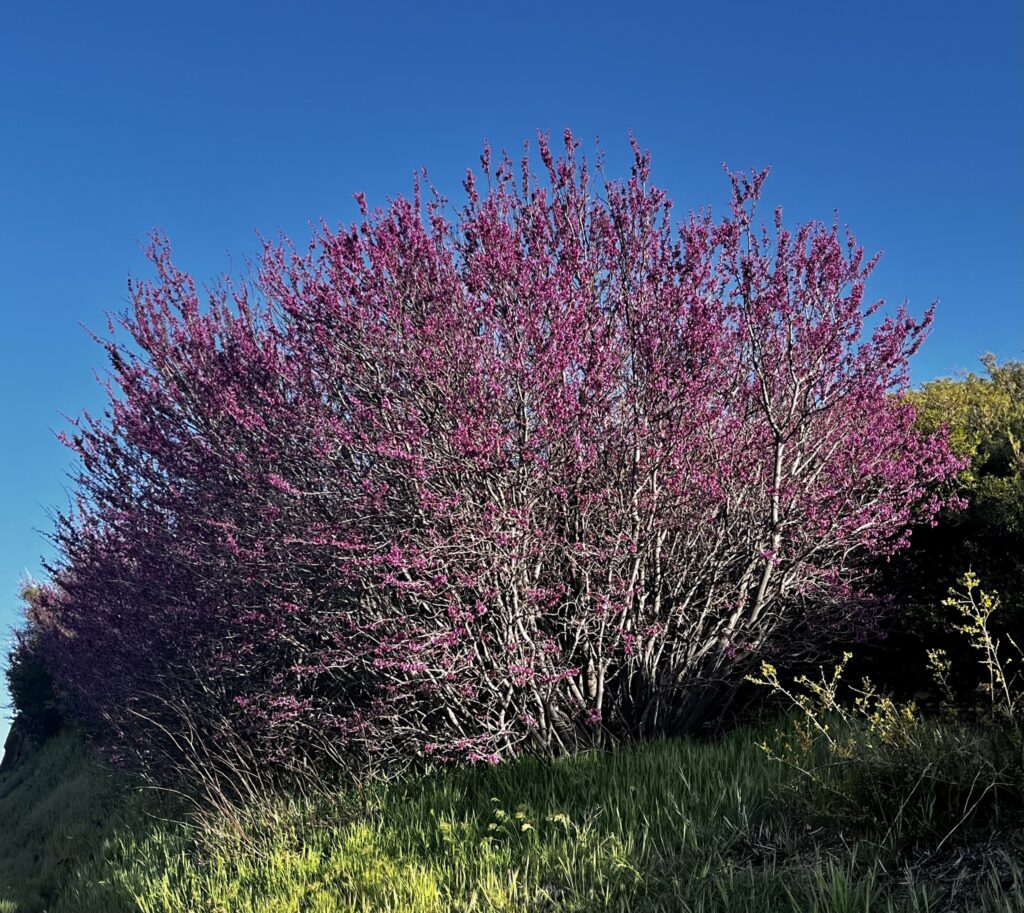
- © Cynthia-Robertson, iNaturalist
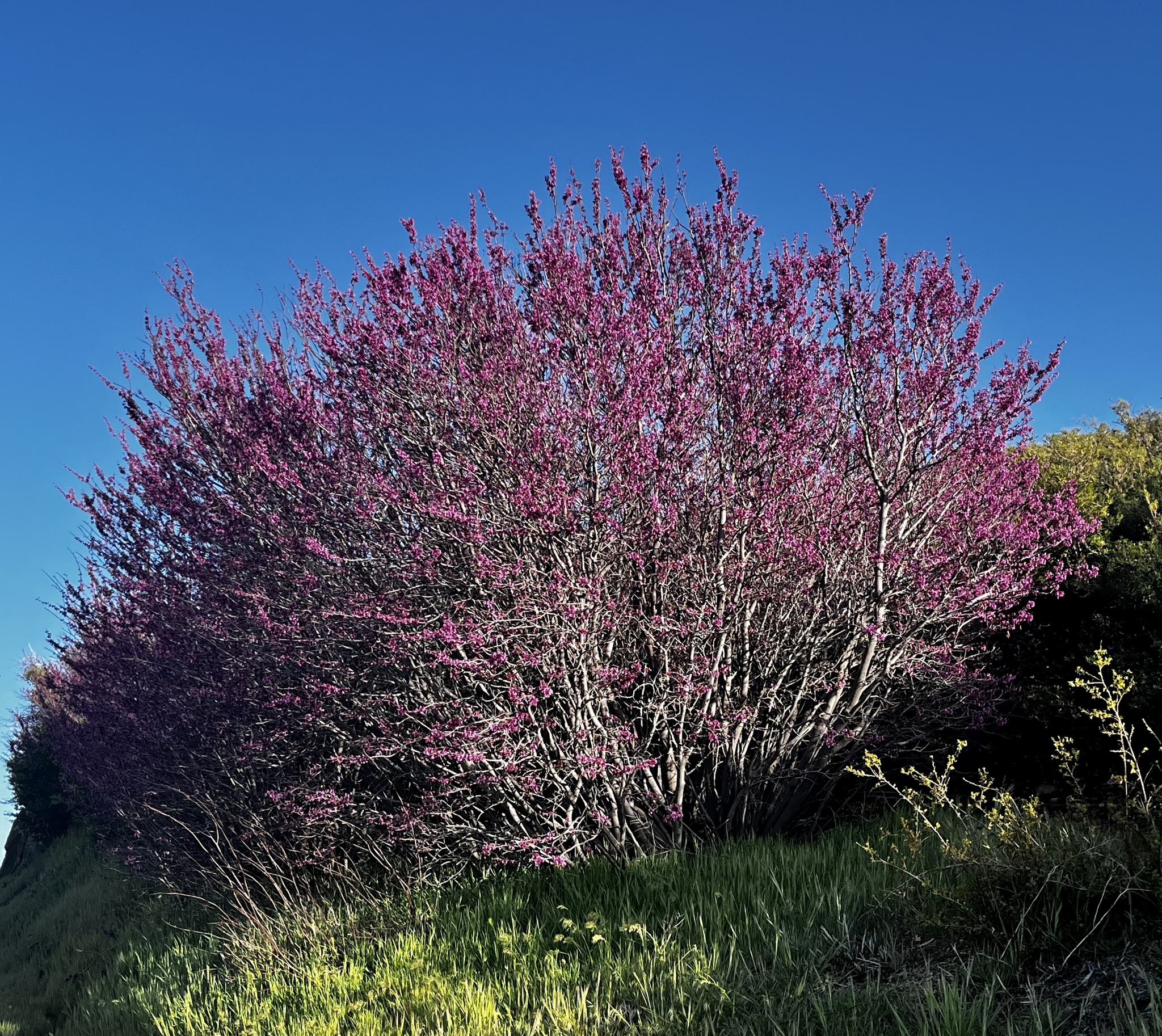
-
- © kjo222, iNaturalist
-
- © April-Damanti, iNaturalist
-
- © Brandt Magic, iNaturalist
-
- © Brandt Magic, iNaturalist
-
- © Brandt Magic, iNaturalist