
New to Trees?
April 9, 2026
Upcoming Educational Opportunities
June 18, 2026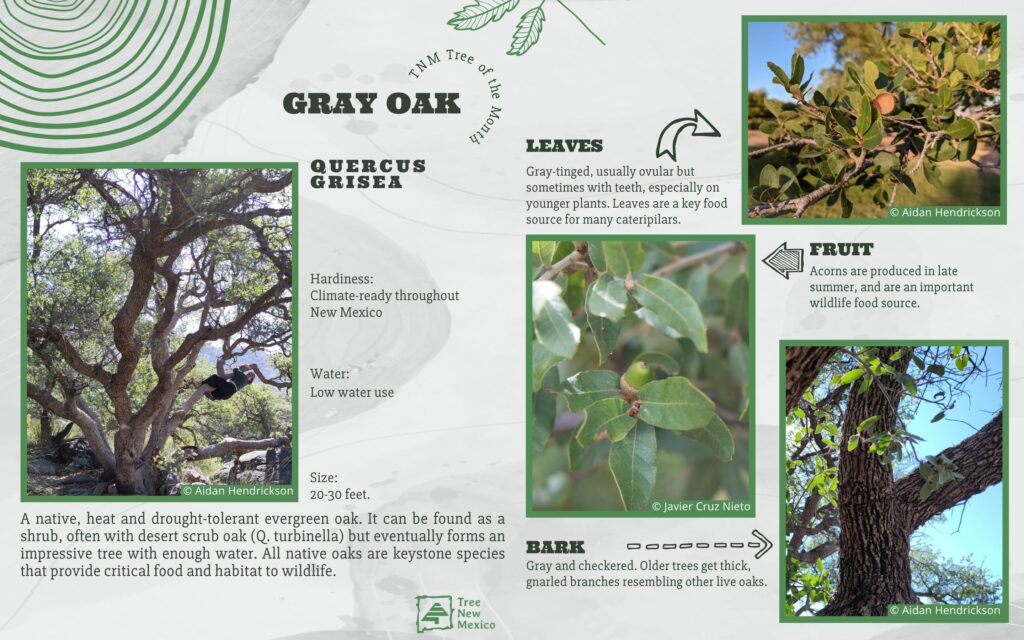
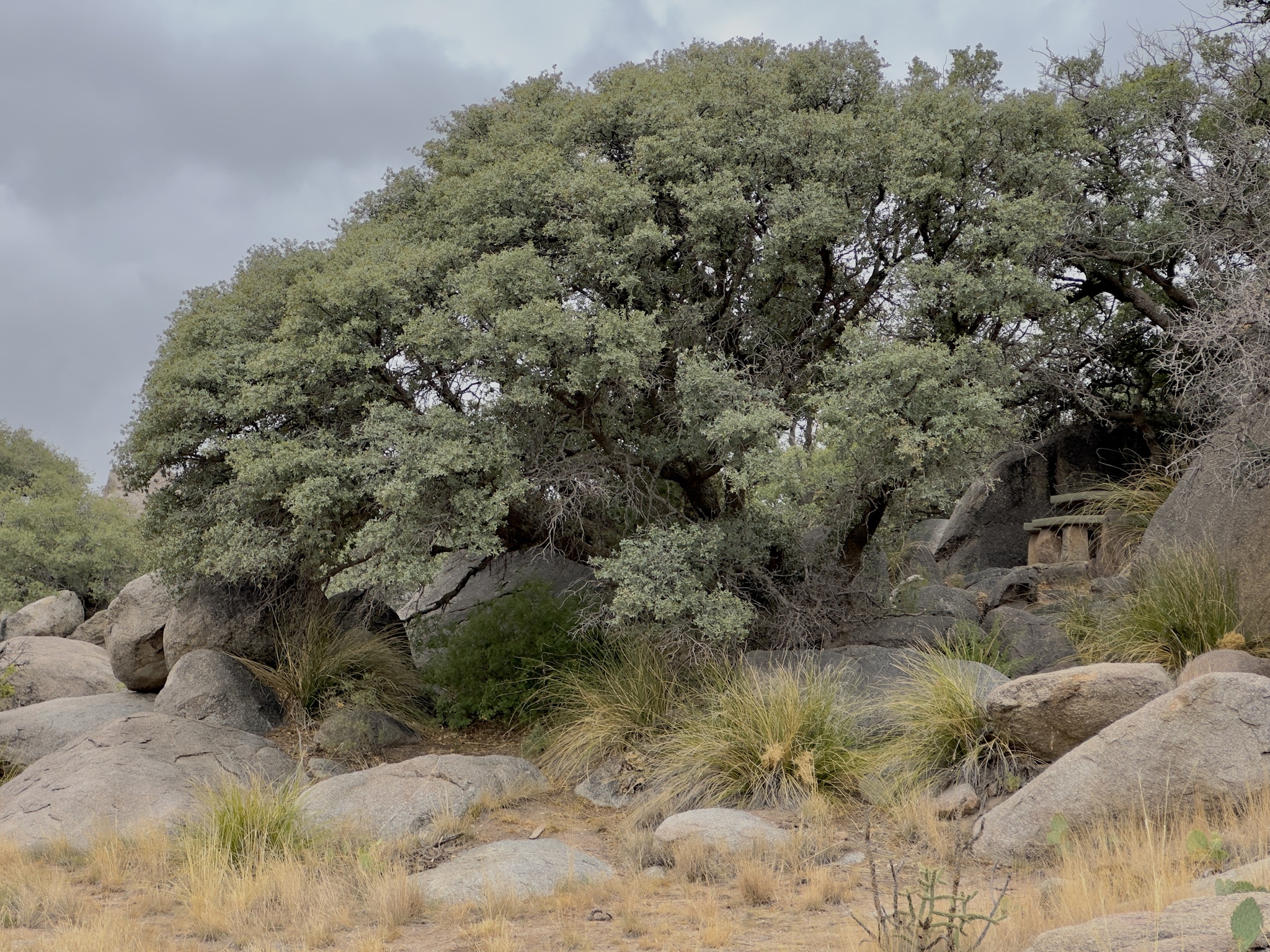
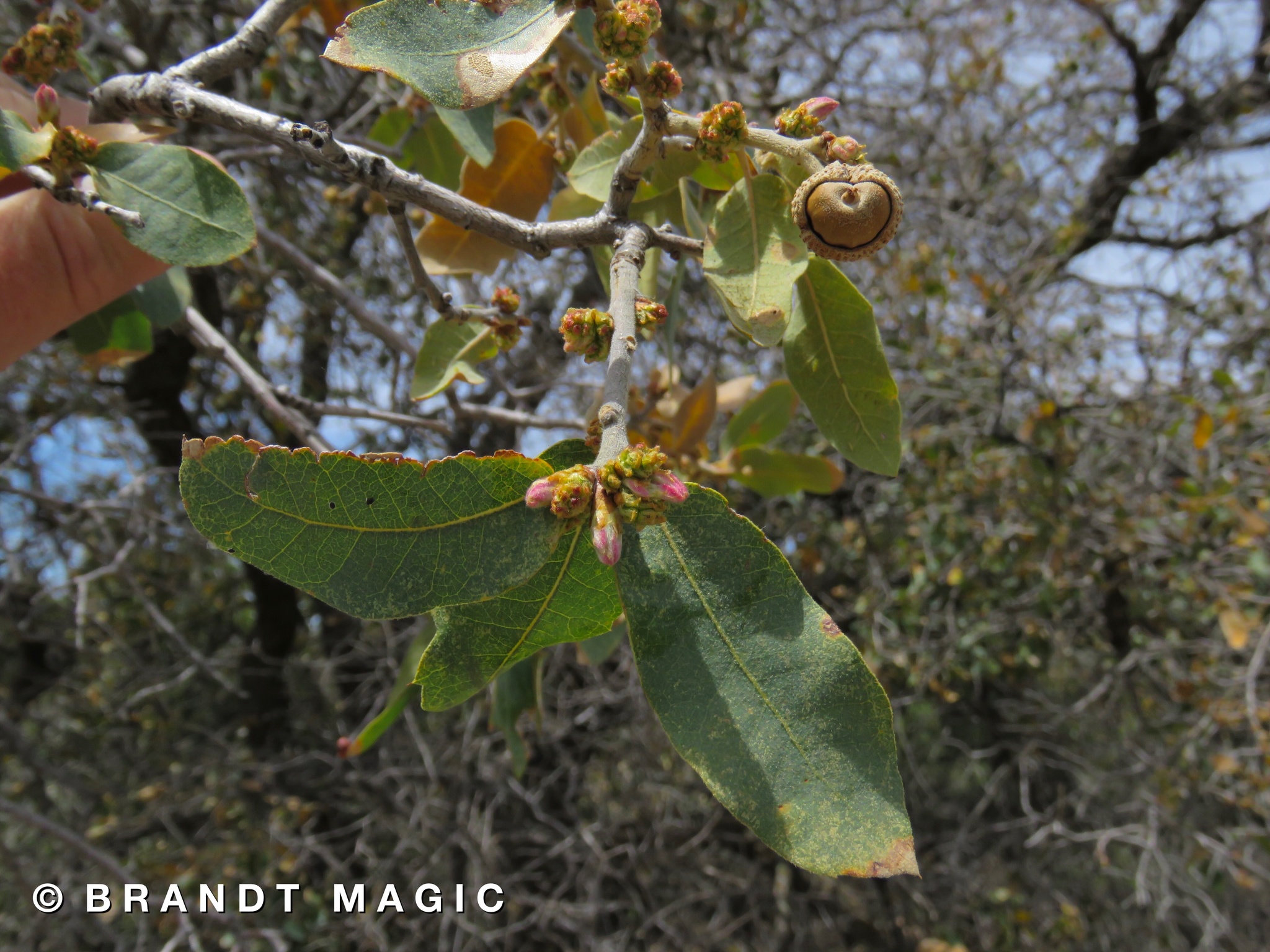
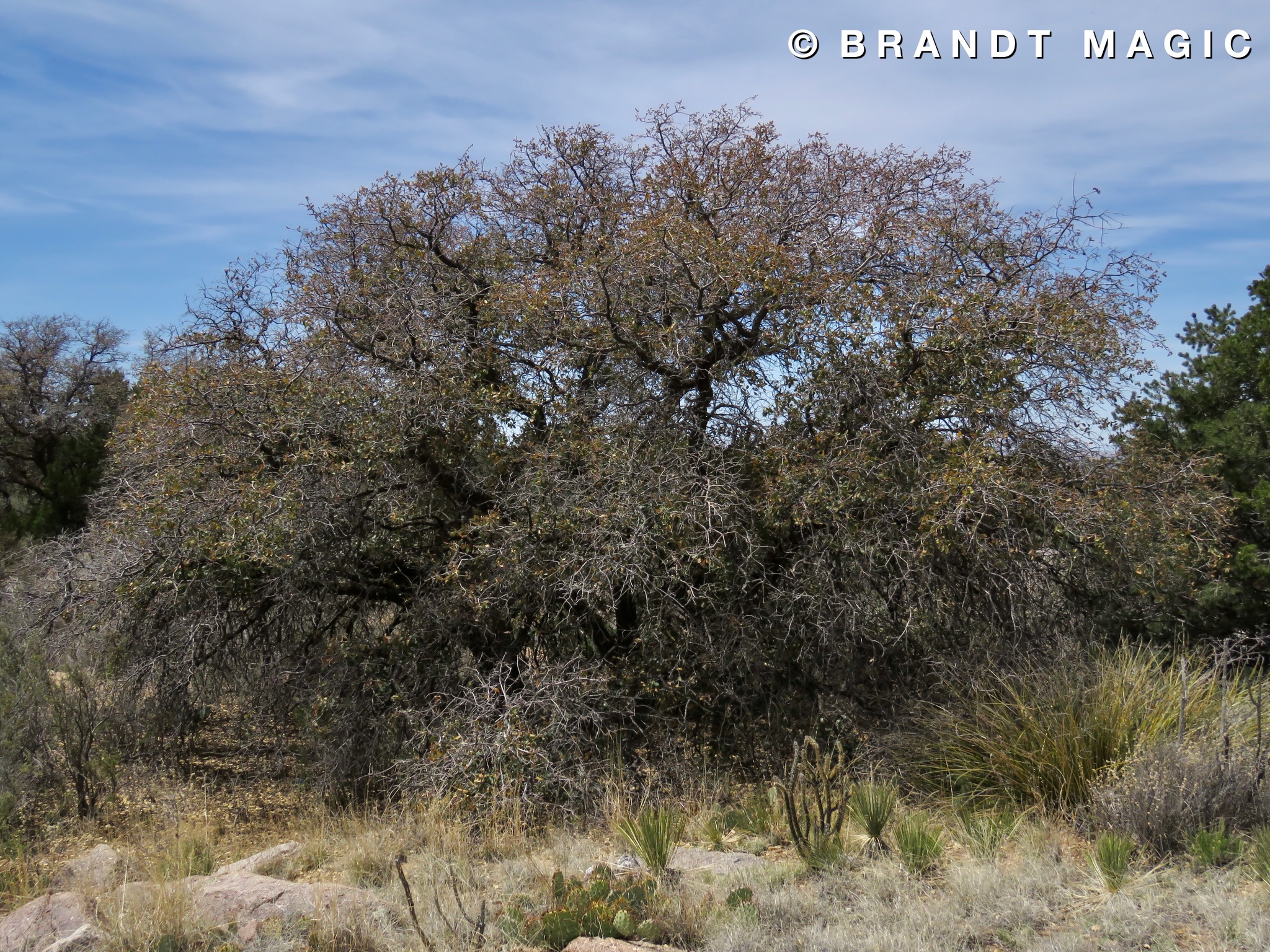
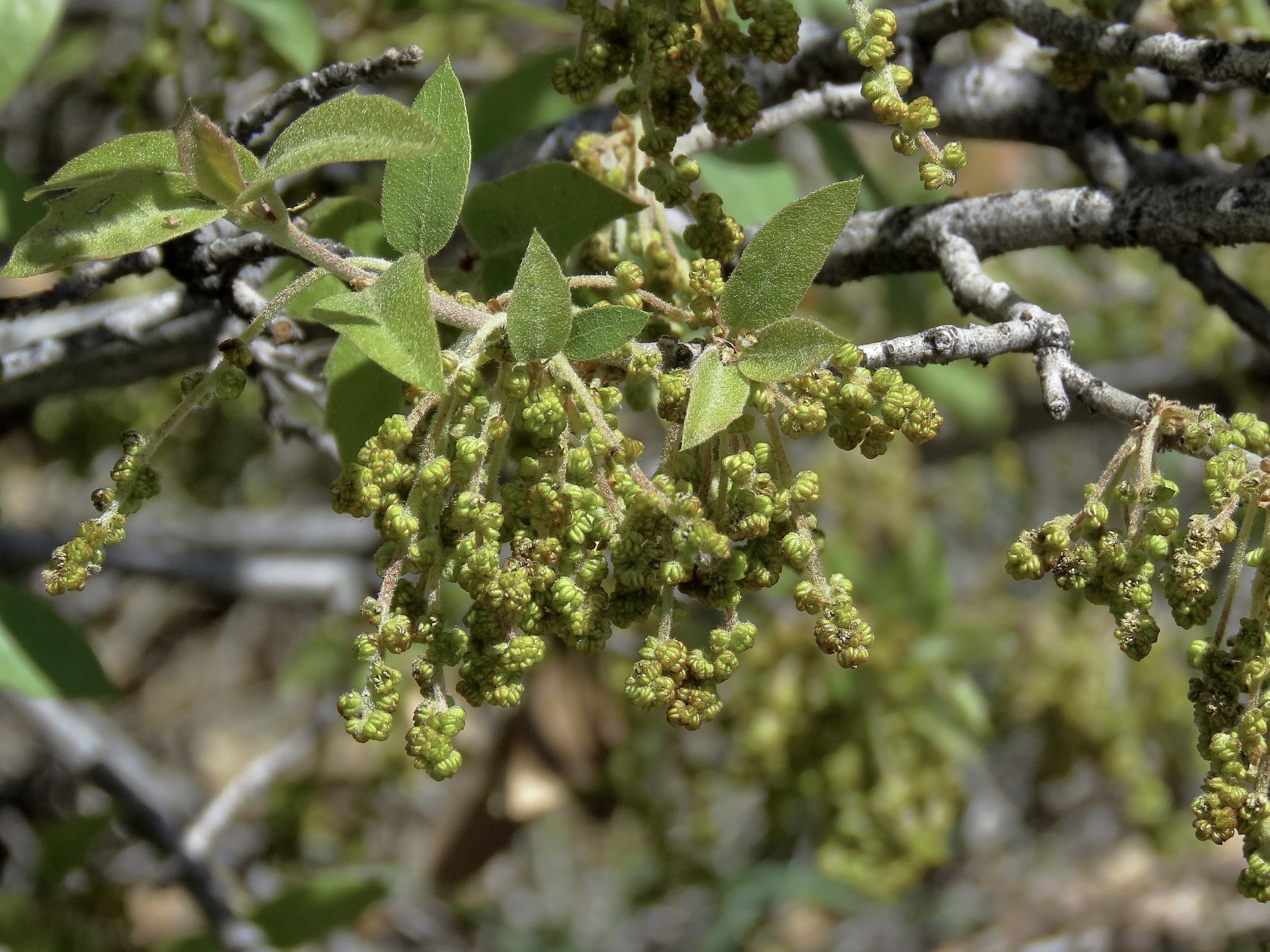
© Brandt Magic, iNaturalist
Scientific name: Quercus grisea
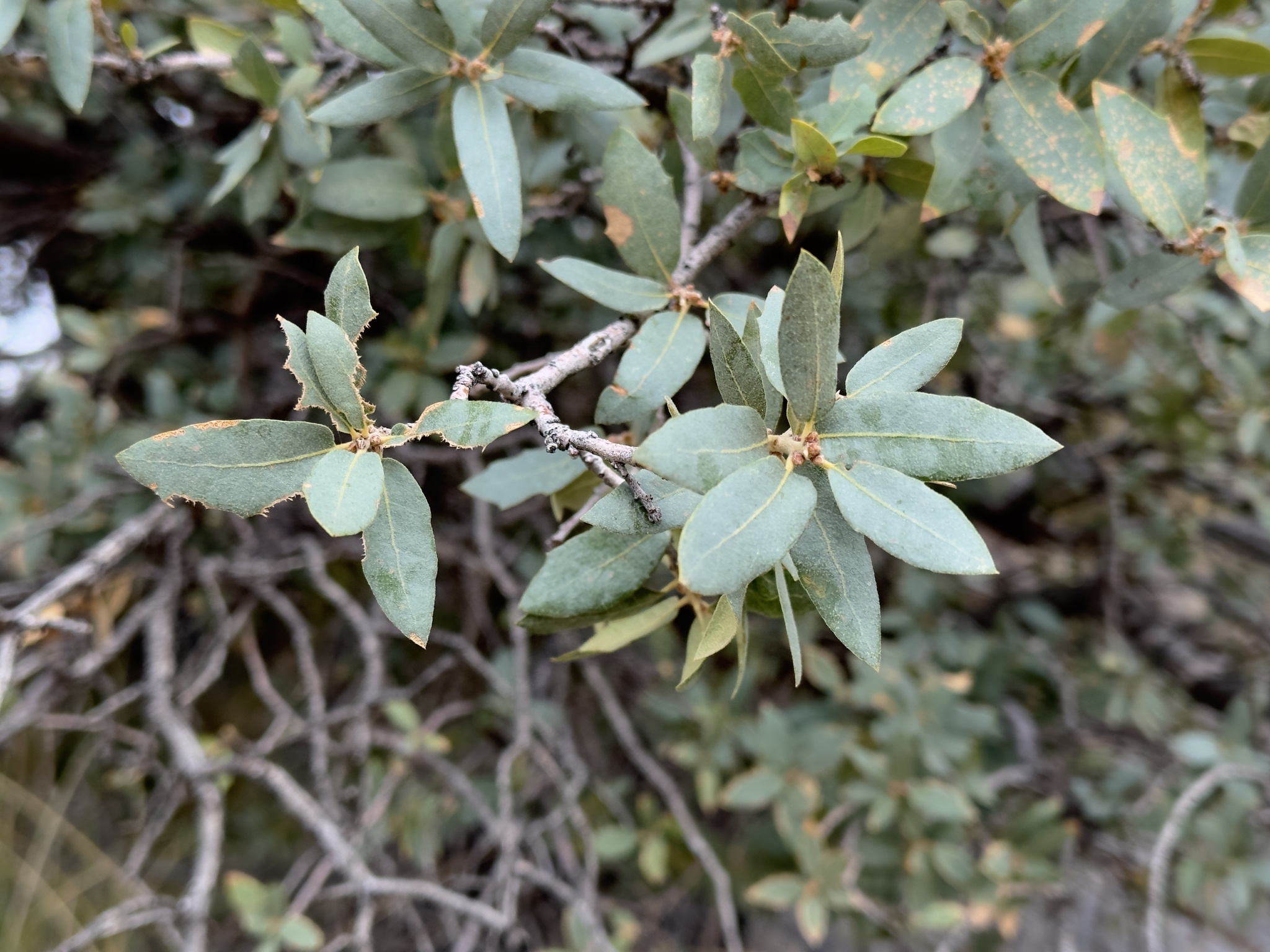
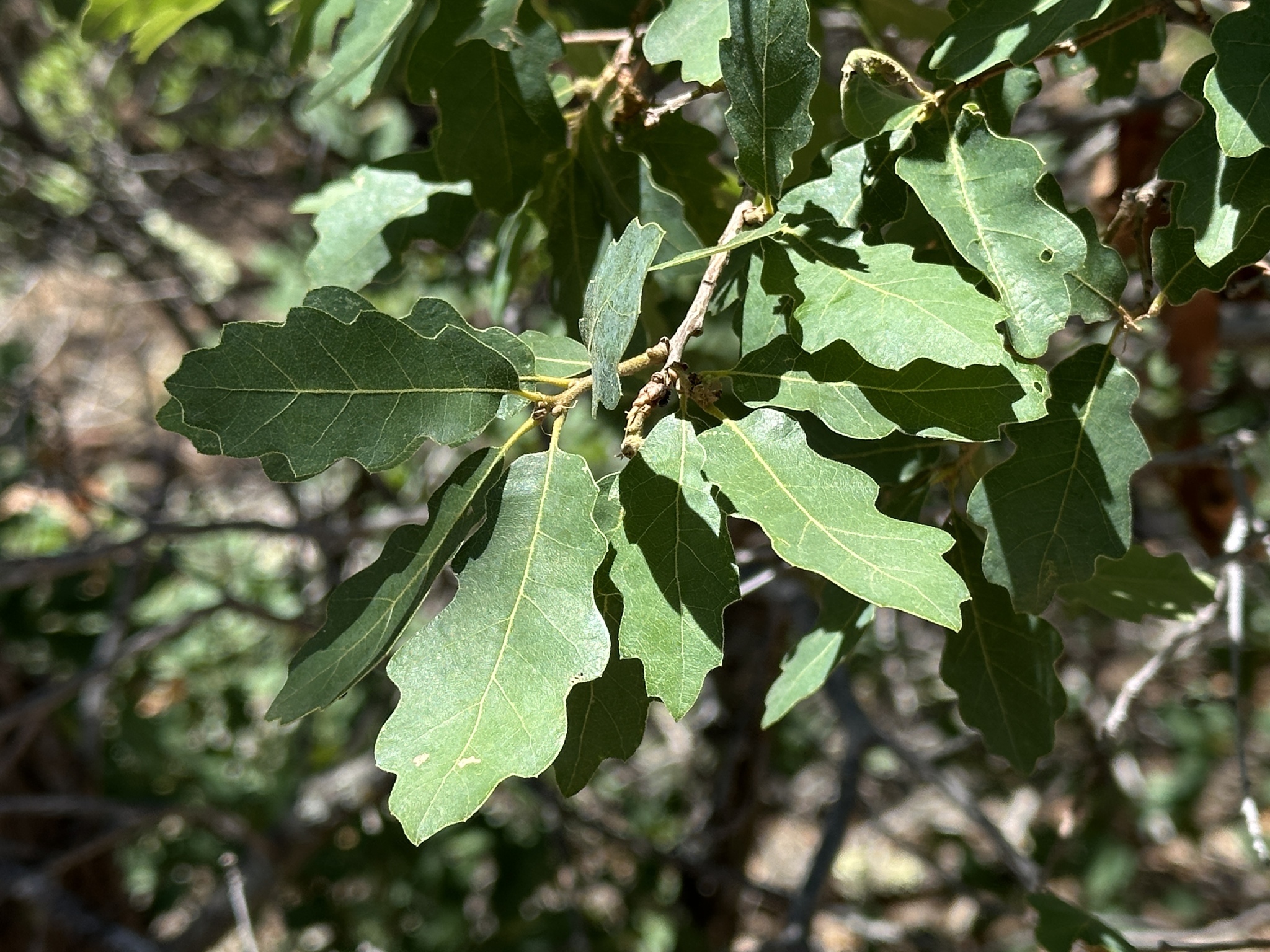
Description: Quercus grisea, Gray oak, is a hardy native oak species found throughout the mountains, foothills, and high desert regions of the American Southwest. Depending on environmental conditions, it may grow into a large shrub or a small to medium-sized tree, reaching 20–40 feet tall. Its broad, irregular canopy and twisting branches give it a rugged and sculptural appearance well-suited to naturalistic landscapes.
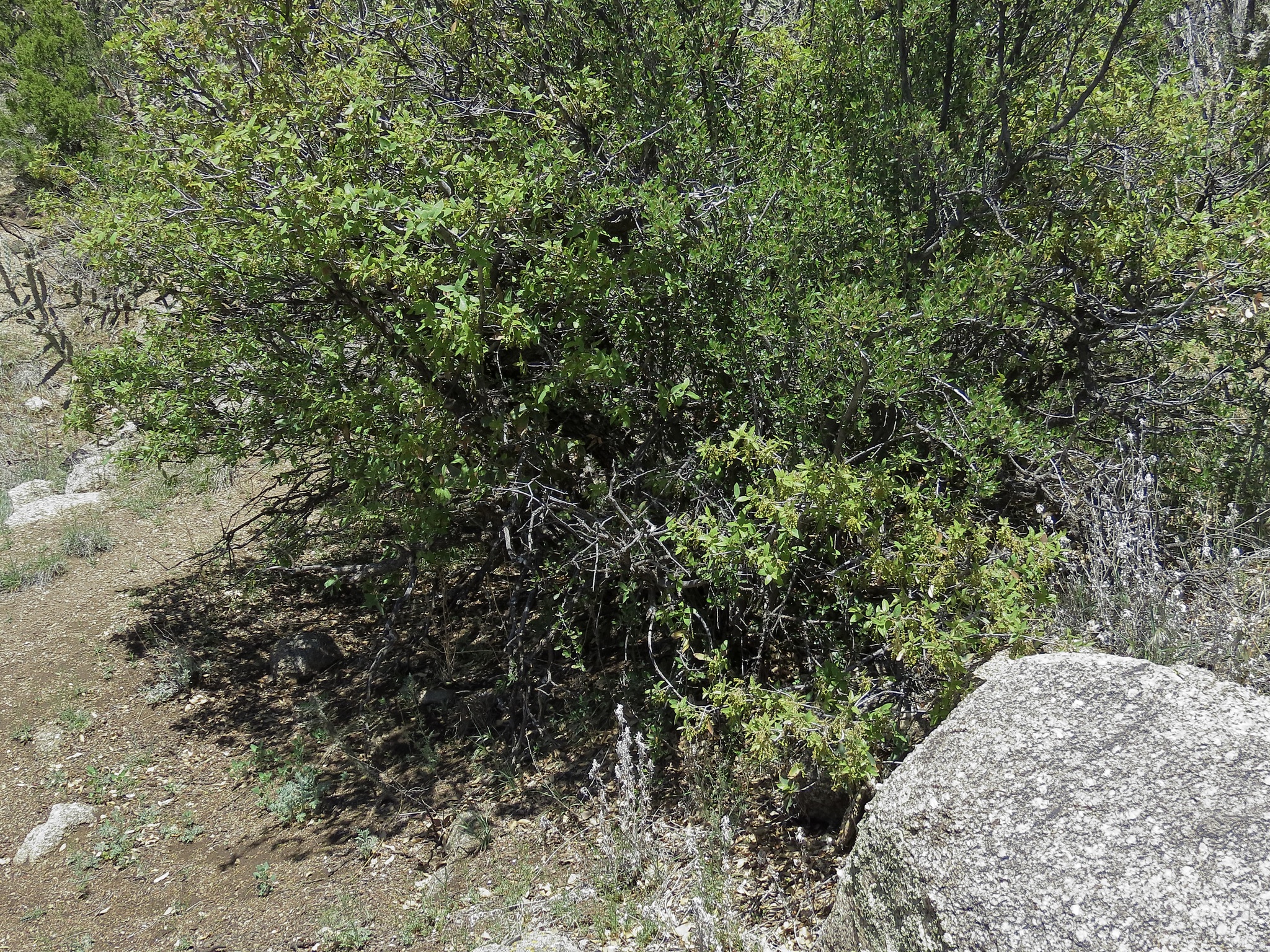
Size: In harsher, drier environments, it may remain a dense multi-stemmed shrub only 6–15 feet tall, while in favorable mountain or canyon conditions, it can develop into a broader shade tree near the upper end of its range.
Gray Oak is considered a small to medium-sized native tree in New Mexico landscapes..
Native Range: Gray Oak is native to New Mexico, Arizona, western Texas, and northern Mexico. It commonly grows in pinyon-juniper woodlands, canyon slopes, rocky foothills, and mountain valleys at elevations ranging from approximately 4,000 to 9,000 feet.
Growing Conditions: Gray Oak is highly adapted to arid climates and performs best in full sun to partial shade with well-drained soils. It tolerates rocky, sandy, and nutrient-poor soils and becomes very drought-tolerant once established. Though relatively slow-growing, it is long-lived and resilient in harsh southwestern conditions.
Landscape Uses: Gray Oak is an excellent tree for xeriscaping, wildlife habitat gardens, restoration projects, and climate-resilient landscapes. Its muted gray-green foliage pairs well with native grasses, desert perennials, and other drought-adapted trees and shrubs. The tree provides shade, erosion control, and year-round visual structure in dry landscapes.
Wildlife Value: Like many native oaks, Gray Oak is a keystone species in southwestern ecosystems. Its acorns provide food for birds, deer, squirrels, and other mammals, while the tree itself supports native insects, caterpillars, and pollinators. Dense branching also offers cover and nesting habitat for wildlife.
Planting Tips:
Fun Fact: Gray Oak is sometimes called “shin oak,” a nickname believed to come from the dense shrubby growth of some oak species that could scrape a person’s shins while walking through thickets.
Soils: It is highly adapted to the thin, rocky soils common throughout New Mexico and the Southwest. Gray Oak does not tolerate poorly drained or consistently wet soils well, and overwatering can lead to root problems.
Once established, it performs very well in dry soils and low-water landscapes, making it an excellent choice for xeriscaping and restoration projects.